UGC ads: what they cost and when they work
A UGC ad uses the style of a person's phone video to present a product in a social feed. Its cost depends on who makes the footage and how it can be used. Judge the result by the claim and the response it earns from buyers.
Most ads on social feeds fail for one reason: they look like ads. The scroll is a stream of people talking into their phones, and anything with studio lighting and a logo animation reads as an interruption. UGC ads exist because the format of the feed beats the production value of the ad. We build an AI UGC ad generator, so we watch this play out in render logs and ad accounts every day. This page is the plain version of what we know: what UGC ads are, what people actually pay for them, where the legal lines sit, and when they don't work.
What are UGC ads?
UGC ads are paid advertisements built in the style of user-generated content: a person holding a product, talking into a front camera, filmed on a phone in a kitchen or a car. The brand pays for the placement, and usually for the video itself, but the ad is dressed as an ordinary post. UGC stands for user-generated content, and the name has drifted: classic UGC was content customers posted on their own, while today's UGC ads are mostly commissioned work that borrows that look. The distinction matters when you brief one: you're not asking for a commercial, you're asking for a believable post.
The format has hard conventions. Vertical 9:16, because that's the shape of TikTok, Instagram Reels and YouTube Shorts. A spoken hook in the first two seconds, because the swipe decision happens that fast. Captions on screen, because most feeds autoplay muted, and the captions carry the spoken words, not marketing copy. One person, one product, one claim per video. When an ad breaks these conventions it stops reading as a post and starts reading as a commercial, and its performance usually drops with it.
That's also why we render go-rocket videos in 9:16 only. We tried treating aspect ratio as a customer choice; it isn't one. The feed already made it.
Do UGC ads work?
They work when they match the feed they run in, and the best public evidence is that the entire performance-marketing industry reorganized around them. TikTok built Spark Ads specifically so brands can run creator posts as paid ads from the creator's own handle. Meta's own creative guidance pushes lo-fi, person-first video for Reels placements. None of that would exist if polished brand films outperformed phone videos in vertical feeds.
Working looks like this in practice: the hook keeps a viewer past the first two seconds, the problem and proof beats hold them to the offer, and the call to action lands before the swipe. When we generate an ad, that arc is not a suggestion, it's fixed: hook, problem, proof, payoff, CTA, in that order, as a pure function of the video's length. We stopped letting a model decide the structure because the structure isn't a creative variable. It's the part of the format that's already solved.
And they don't always work. A UGC ad is a testing format: the honest workflow is several hooks against the same product, small budgets, and a willingness to kill most variants. A single UGC video treated as a hero asset usually disappoints, because the format's advantage is iteration speed, not any one video. The categories where the format struggles are predictable too: considered purchases with long sales cycles, strictly regulated products, and audiences that live outside vertical feeds. A B2B platform sold to procurement teams doesn't lose because its UGC ad was bad; it loses because the buyer wasn't scrolling.
Hey there :) clicking this would help us so much!
What do UGC ads cost in 2026?
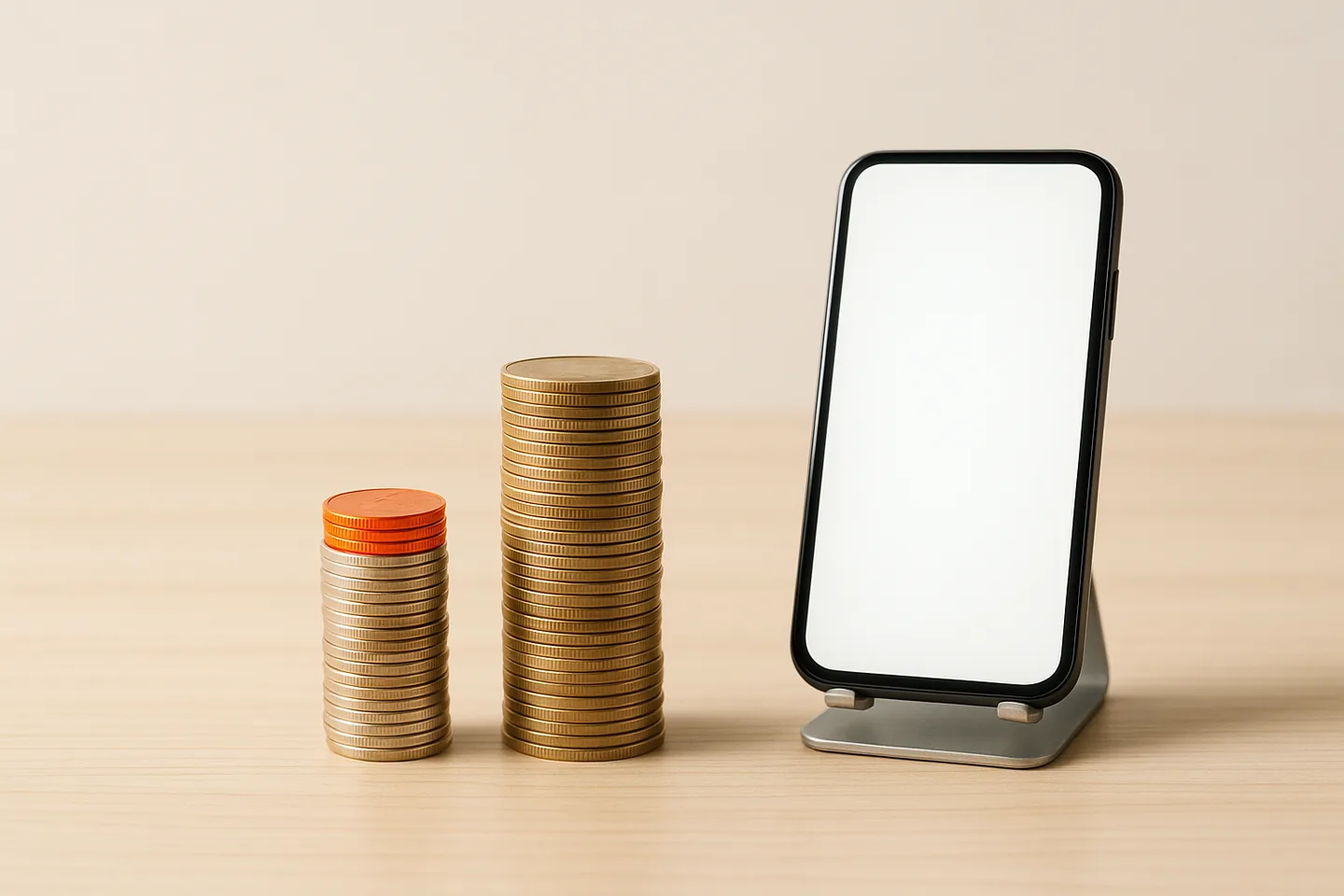
Human-made UGC has settled into a known price band. Influee's 2026 rate guide puts creator rates at $100 to $500+ per video. JoinBrands' guide from August 2026 reports most professional UGC creators charging $500 to $1,200 per video, with an overall range of $200 to $3,000. Fueler's US pricing survey lands on roughly $212 as the average for a single 30 to 60 second video. On top of the video itself, brands typically pay extra for usage rights, whitelisting and raw footage.
Watch the extras, because they routinely double the invoice. Usage rights are priced by duration and surface: a video licensed for organic posting costs less than the same video licensed for paid ads, and perpetual paid usage is the expensive tier. Whitelisting, running the ad from the creator's own account, is its own line item. Raw footage, extra hook variants and rush delivery all bill separately. The sticker price of a UGC video is rarely the price you pay to actually run it as an ad.
Those numbers are why AI-generated UGC exists as a category. A generated video costs a few dollars of compute. Our first video is $9, a single video after that $19, and ten a month on the plan work out at $9.90 each; the honest comparison is not one $19 video against one $500 video, it's ten cheap variants tested this week against one expensive video delivered in three weeks. The creator's video may still win the head-to-head. The generated batch wins the calendar.
The price gap also changes who advertises at all. At $500 per video, UGC ads are for funded brands. At $9, a person with a Shopify store and no audience can test hooks the same way a media buyer does. That's the actual disruption, more than any quality argument.
Are UGC ads legal?

Yes, with two rules that get ignored too often. First, paid partnerships must be disclosed: the FTC's Endorsement Guides require a clear material-connection disclosure when a creator is paid, and platforms carry their own toggles for it. Second, testimonials must be true: a scripted line like "I've used this for six months" from someone who hasn't is a fabricated endorsement, and the FTC has fined exactly that.
AI raises the stakes. A generated presenter never used the product, so a generated script that claims personal usage history is a fabricated testimonial by construction. We hit this line building our own product and drew it in code: our generated scripts run in a first-person reaction voice, opinion and doubt-to-conviction, and a validator rejects any script that claims durable usage history or measurable personal results. The words "I've been using this for months" cannot leave our pipeline. If you script your UGC ads by hand, you need the same rule on paper.
The practical checklist is short: disclose paid partnerships, keep claims to what's true and provable, and if the presenter is synthetic, don't write them a past.
How is AI changing UGC ads?
Generated video crossed the line from demo to production tool in 2025, and search behavior shows it: worldwide interest in "AI UGC" went from zero in early 2025 to its all-time peak by mid-2026 on Google Trends. The stack that made it real is text-to-video models for scene footage, lip-synced avatars for the presenter, and voice synthesis good enough to carry a hook.
What AI actually changes is the economics of iteration, not the craft of persuasion. The arc of a working ad is the same whether a creator films it or a model renders it. What disappears is the three-week loop of brief, shipping, filming and revisions. What appears is a new failure mode: fully model-driven ads drift into generic praise no human would say. The fix, at least the one we ship, is to keep the model on a short leash: it writes the words inside a fixed structure, and deterministic checks catch fabricated claims, banned phrasing and off-brand color before render.
Where it lands: human creators keep the work that needs a real face, a real kitchen and real credibility. Generated UGC takes the volume work, hook testing, localization, product-page videos, the fifty variants nobody would pay $500 each for. Most ad accounts will run both.
How do you get UGC ads for your product?

Three routes, in ascending order of speed. Marketplaces like Influee or JoinBrands match you with creators: strongest authenticity, slowest loop, priced per video as covered above. Agencies bundle strategy and volume on retainer: least work for you, highest cost, and you inherit their creator pool. Generation: you paste a product URL into go-rocket.ai, the system reads your brand, colors and product images from the page, writes the script inside the fixed arc, and renders a 9:16 video with a speaking presenter in minutes.
One design choice matters more than it seems: in our renders, the AI presenter is the only person on screen. Generated crowd scenes and fake customers push an ad into the uncanny territory that gets it flagged and, worse, ignored. One presenter, real product imagery from your own page, spoken captions, and the brand's own colors, never ours, on every overlay.
Whichever route you take, buy iteration, not a video. Ten hooks this month beat one perfect film this quarter, at any budget.
FAQ
User-generated content. In advertising it means an ad shot to look like a customer made it, whoever actually held the camera.
You can film your own and pay nothing but your time. Every tool that generates them for you charges once you want the finished file.
The TikTok Creative Center and Meta's Ad Library both list live ads by brand and region. Both are available without payment and neither needs an ad account.
No. A generated presenter delivers the same format, and the ad account treats the upload identically.