UGC ad examples, taken apart second by second
A useful UGC ad example is a timeline rather than a brand name: what happens in the first second, how many words fit in fifteen, and where the call to action is spoken.
Search for UGC examples and you get the same short list of famous names. Coca-Cola printed first names on bottles. Apple put customer photos on billboards. GoPro paid customers for their best clips. All three are real, all three worked, and none of them tells a brand with 400 followers what to put in the first second of a video it has to run next week.
User Generated Content, meaning video and photos made by customers or hired creators instead of the brand, shows up in two very different shapes. One is a campaign that collects posts from millions of existing customers. The other is a single vertical video file, fifteen to thirty seconds of one person talking, bought or made and then run as a paid ad. The famous examples are almost all the first shape. Almost every brand reading an examples list needs the second.
So this post takes apart the second shape instead of listing it. The main example is a video we rendered ourselves, because it is the one ad whose every millisecond we can show you. Some of it is our house style and we will say where. The timings, the word budget and the mistakes that cost us three failed renders in one day apply to anyone making UGC ads, with AI or with a person and a phone.
What counts as a UGC ad example?
A UGC ad example is one vertical video, usually 15 to 30 seconds long, of one person talking about one product, that a brand runs as paid media. A hashtag campaign, a review gallery or a contest is an example of a UGC program, which is a different thing to copy.
The ranking lists blur the two, and it shows when you sort them. Yotpo's list of ten UGC examples, dated July 2025, is ten programs: hashtag campaigns, on-site photo galleries, a cup design contest. Billo's list of video examples, updated September 2026, is closer, but still counts the Chipotle #GuacDance challenge next to ad formats. CineRads, in February 2026, went the other way and described formats without showing a single ad, on the grounds that screenshotting another brand's ad is "not ours to publish". That is a fair position, and it leaves the reader with a template and no timeline.
For the purpose of making your own, the useful unit is the file. It has a length, an opening, a word count, a place where the product appears and a last sentence. Everything below is about those five things. If you are still deciding whether this format belongs in your budget at all, the UGC ads guide covers the format end to end.
What does a 16 second UGC ad do in each second?
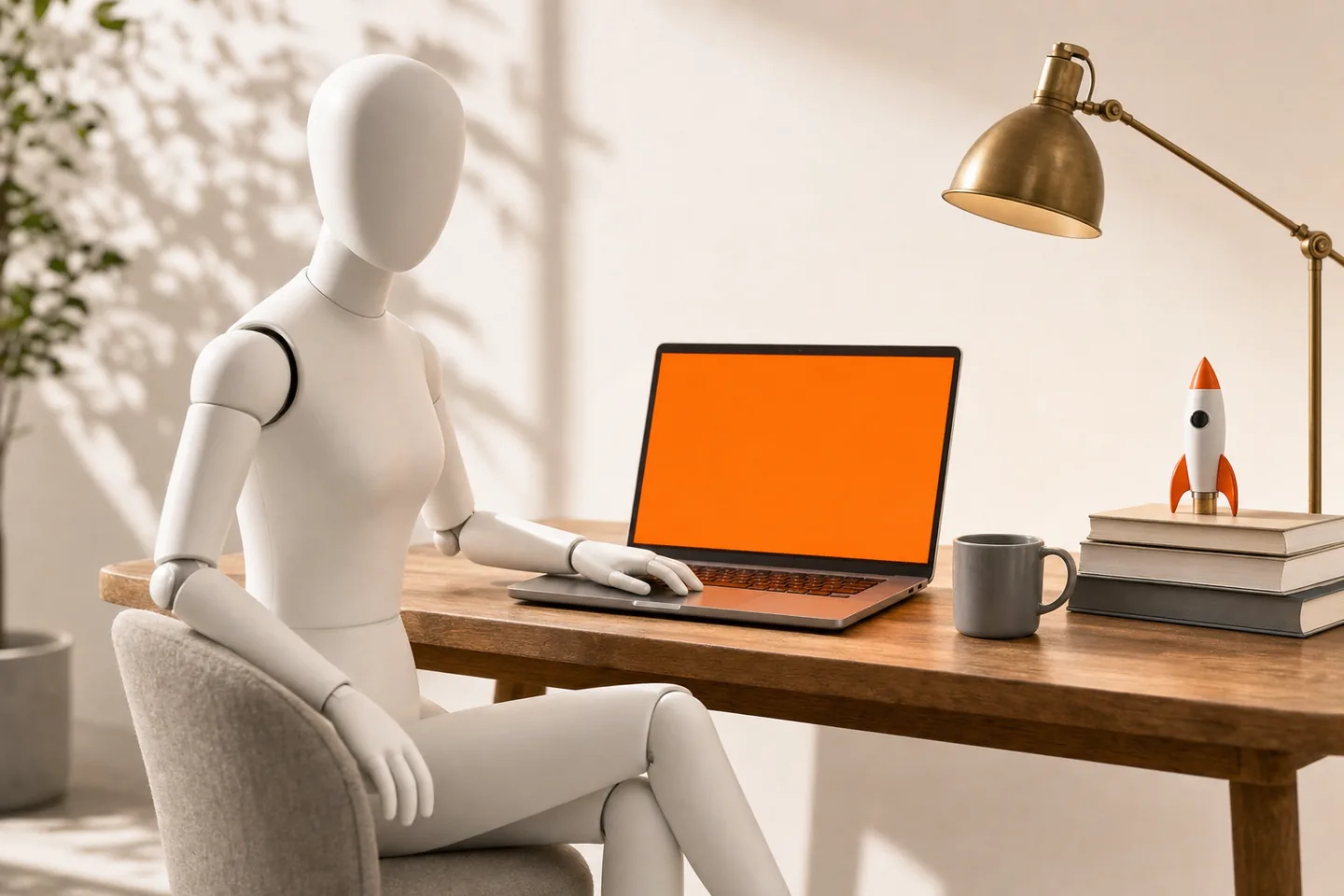
A 16 second UGC ad spends five seconds earning attention, eight seconds saying what the product does, and the last two and a half seconds on a spoken recommendation. That is the timeline of render 6afe95c1, a 16.06 second ad we made on 11 September 2026 for ThesisAI, an academic writing tool, and it cost $5.02 all in.
The frame is one woman at a desk at night. In the first second and a half she turns her laptop around so the product's page faces the camera, which is the opening. At 0.4 seconds a five-word line fades in at the top of the frame, "Eighty pages the night before", and stays until 5.0 seconds. That is the hook caption, and it is the only text on screen that is not a word she is saying. From 5.1 seconds the captions switch to the spoken words, two or three at a time, each chunk with one emphasis word. At 13.47 seconds she starts the close, eight words, finished at 15.79. The last quarter second is a smile into the camera.
There is no cut anywhere. Since that render, our pipeline adds exactly one kind of edit on setups where the phone stands still: a push-in to 108 percent for 600 milliseconds on an emphasis word. Replayed on this ad, those landed at 5.31 and 10.27 seconds, and we switched them on after comparing the two versions frame by frame.
What is missing matters as much. There is no logo animation, no product packshot, no price, no button and no end card. Every one of those makes a video look like an advertisement, and a viewer who recognises an advertisement scrolls. The whole ad is one continuous shot of one person, which is also why it could be made for five dollars!
Hey there :) clicking this would help us so much!
Which types of UGC ads should you copy for your product?
Copy the type your product can physically support, which is decided by what the product is far more than by what is trending. Something you hold gets shown in the hand, something you wear gets worn, software gets used on a screen, and a sofa gets sat on.
The formats on every list are real: the testimonial to camera, the unboxing, the demo, the problem and solution, the before and after, the try-on, the walk and talk. When we built our own catalogue we ended up with nine interactions and a rule for which product can use which. A face serum can be applied on camera. A backpack can be worn on a walk, with the presenter holding the phone at arm's length. An app gets a person at a desk with the laptop open, like the example above. A mattress cannot be unboxed in one hand, and a video that pretends otherwise looks wrong in a way viewers notice before they can say why.
Two formats need care before you copy them. Before and after videos are the best-known way to show a result, and a result is a claim. If the person on screen did not actually get it, the video is a fabricated testimonial, whoever filmed it, and the legal post goes through what that means for the brand. The unboxing only works if the product is new to the person, so it suits a first order, not a repeat customer.
What should happen in the first second of a UGC ad?

Something should already be happening in frame zero: the product held up close to the lens, a person mid-step, a bag landing on a table. A face that waits a beat before speaking is the most common way to lose the viewer before the hook line ever loads.
We learned the precise version of this the expensive way. Every one of our ads now carries one opening, and the opening is decided by who holds the phone. There are six setups: propped on a surface, at a desk laptop, in a mirror, at arm's length, at arm's length while walking, and held by a friend. Each has openings that happen naturally on it, such as a near-drop when you walk and film yourself. In a test on 10 September, the product brought up to the lens landed as the opening in four clips out of four.
The next day, three of five renders failed before any video was made, and all three failures were openings. A lid half open against a page on a screen, a product sitting below the edge of the frame, a tilted picture. Each described a camera move or an in-between moment that a single still image cannot show, and our pipeline starts every ad from a still. The rewrite describes a state of the person and the product instead, and the pass rate on the same test stills went from 2 in 12 to 7 in 12. The rule transfers to a human shoot directly: brief the first frame as a photograph, then let the creator move out of it!
How many words fit in a 15 second UGC ad?
A 15 second UGC ad fits about 35 to 40 words in English, roughly 205 characters of speech. Most first scripts are twice that long, and a script that is too long gets read too fast, which is the fastest way to sound like an ad.
Our number comes from measuring rather than guessing. For each language we measured the median speaking rate of the voices we render, then give the script that rate multiplied by the length of the ad minus a 1.5 second breath at the end. English comes out at 15.2 characters a second, so a 15 second ad gets 13.5 seconds of speech and about 205 characters. German speakers pack more into a second, 16.5 characters, so German gets 223. Japanese is written far more densely and gets 81 characters for the same fifteen seconds.
The 16 second example above spoke 43 words in 221 characters, and that is already the dense end of natural. When a creator sends you a script, count its characters before you read it. Anything much above the budget will either be rushed or cut in the edit, and the cut usually lands on the one sentence that explained the product.
Where does the call to action go in a UGC ad that should not look like an ad?
The call to action goes in the last sentence the person says out loud, and nowhere else. In the example that sentence starts at 13.47 seconds and is eight words long, the kind of thing a friend says when recommending something, with no discount code and no "link in bio".
We made this a hard rule rather than a style choice. Our renderer has no layer type for a call-to-action pill, a "Shop now" chip, a price badge or an end card, so nobody can add one by accident, including us. The platforms already put a button under every ad, and a second one inside the video only tells the viewer what they are watching. The same thinking keeps the video in the customer's own brand colors and never in ours.
If you want to go through real ads with that lens, the Meta Ad Library and TikTok's Creative Center show what is running today, and the Spark Ads post covers how creator videos get run from the creator's own account. For what a human creator charges to make one of these, see the rates post. If you would rather see this exact timeline applied to your own product page, the generator builds one from the URL. Either way, judge an example by its first second and its last sentence, because that is where the good ones are made!
Questions people also ask
- What does a UGC video look like?
- A UGC video is usually one person filmed vertically on a phone, talking straight to the camera about a product for 15 to 30 seconds. It has captions of the spoken words and nothing that looks like a produced commercial.
- Where can I find real UGC ad examples?
- The Meta Ad Library shows every ad currently running on Facebook and Instagram, searchable by brand, and TikTok's Creative Center has a Top Ads section filterable by industry. Both show the actual ad files, which the curated lists on vendor blogs mostly do not.
- What are some famous UGC campaign examples?
- The usual examples are Coca-Cola's Share a Coke, Apple's Shot on iPhone and the GoPro Awards. They are campaigns that collected content from huge existing customer bases, which makes them hard to copy for a young brand.
- What do UGC Facebook ads look like?
- UGC Facebook ads are mostly the same 9:16 talking videos that run on Reels and TikTok, placed in the Reels and Stories slots. A 4:5 crop is common for the main feed, so keep the face and the product away from the top and bottom edges.
- Are AI UGC ads real UGC examples?
- AI UGC ads copy the format of User Generated Content with a generated presenter: the style is the same, and no customer made them. They need the same disclosure care as paid creator videos, and a generated presenter describing an experience nobody had is a fabricated testimonial.