Show your face for UGC when a person has to vouch for the product, and your hands when the product proves itself
Show your face for UGC when the ad needs a person to vouch for the product, and go faceless when the product proves itself in your hands; most briefs still ask for a face, and a generic face is the easiest part to replace.
UGC means User Generated Content: video that looks like a real customer filmed it, with one person, a phone, a product and a few honest sentences. Brands pay creators to make it as ads, and a new creator's first question is often whether they have to be in it. The answers on Google's first page come from creator marketplaces, and they contradict each other: one help center says creators must show their faces, another platform sells the faceless route as cheaper and faster.
Both are right about their own customers. The better question is what the face does in a given video. When the ad's power is a person saying "this works for me", the face is the evidence. When the power is the product doing something in a pair of hands, the face is decoration, and sometimes a distraction. We build AI-generated UGC for a living, so we have had to make this choice in code, once per template, fifteen times. Here is how it came out.
Is it better to show your face for UGC?
For most paid UGC work, yes: showing your face opens more briefs, and it is the only way to deliver the testimony-style ads that carry a personal claim. Faceless UGC is a real lane, but a narrower one, built on hands, product and voice, and it is usually paid on performance instead of per video.
The reason is mechanical. A UGC ad works in the second or two before the viewer notices it is an ad, and a face looking into a phone camera is the strongest signal that a person made the post. The face also carries the claim. "I use this every morning" from someone you can see reads as testimony; the same line over a pair of hands reads like a voiceover, which is what it is.
Faceless still wins where the demonstration is the argument, for creators who need privacy, and for brands that want clips they can re-cut without depending on one person's look. The UGC creator guide covers the job either way.
Why do most briefs ask for a face?

Because the brief is buying a person's reaction, and a reaction lives in a face. Billo, one of the larger UGC marketplaces, says it flatly in its creator help center (updated 20 September 2024): creators must show their faces in videos, unless the brand's brief says otherwise.
Research backs the instinct, though less of it than the confident blog posts suggest. A Georgia Tech and Yahoo Labs team analysed 1.1 million Instagram photos and found that photos with a human face were 38 percent more likely to receive likes and 32 percent more likely to receive comments (published March 2014). The number of faces, their age and their gender made no difference; one face was enough. That was organic photos in 2014, never repeated for paid vertical video, so read it as a direction.
Google's ABCD framework for YouTube ads (Attract, Brand, Connect, Direct) lists "feature people" under Connect, and Kantar's model, which scored more than 11,000 ads, predicted a 30 percent lift in short-term sales likelihood for ads that follow the whole framework. That lift belongs to the full checklist and comes from a model, so none of it can be credited to faces alone. What we could not find anywhere is a public head-to-head test of face against faceless UGC ads on Meta or TikTok. Every confident claim either way comes from a vendor.
Hey there :) clicking this would help us so much!
What does faceless UGC look like?
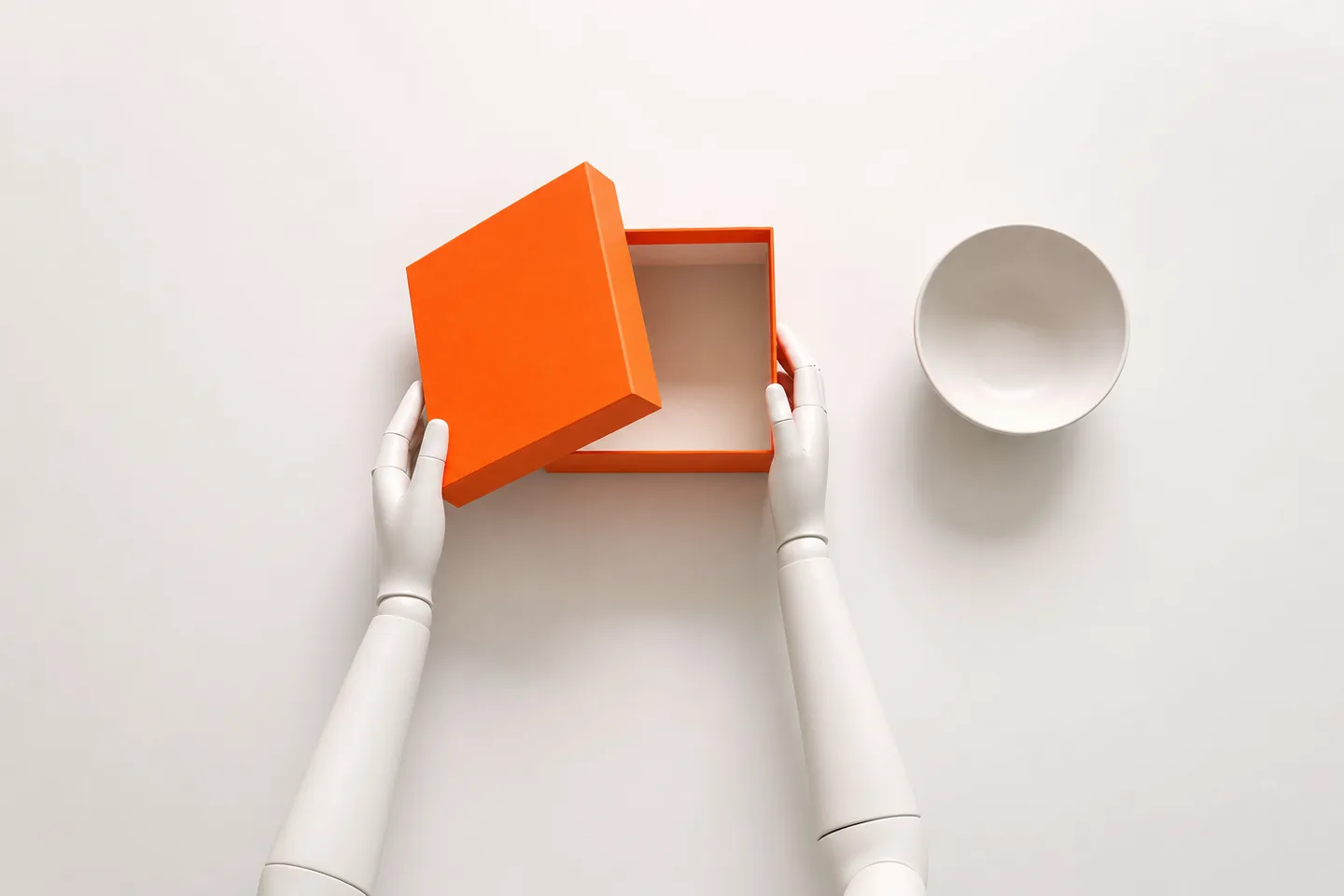
Faceless UGC is a real creator filming everything except their face: hands opening and using the product, a point-of-view (POV) shot looking down at the table, a phone screen, the room, with a voiceover or captions carrying the words. A person still filmed it, which separates it from both stock footage and generated video.
The common formats: unboxing from above, the POV demo with the camera where the creator's eyes would be, skincare cropped below the eyes, screen recordings for apps, and food cropped at the chin.
The business model differs more than the footage does. Digiday's report on faceless creators (30 June 2025) quotes Publicis describing them as a cheaper option for lower-funnel, performance-driven campaigns, usually paid on how the videos perform instead of a flat fee. Less exposure for you, and more of your income riding on whether the ad sells. Make Influence, a creator platform, draws the line by category: faceless suits products where the presenter's face does not change how credible the claim is, and fails where buyers need to see a reaction.
Which products need a face, and which need hands?
Products that make a promise about how you will feel or look need a face; products that prove themselves by working on camera need hands. Skincare, makeup, clothing, food and anything sold on taste or confidence belong to the first group, while tools, gadgets, cleaning products, kitchenware and many apps belong to the second.
We had to settle this in code. Our product turns a product page into a vertical ad, and every ad is shot to one of fifteen templates: five where a person talks into the camera they are holding, five hands-on demos, and five screen demos for software. Fourteen of the fifteen keep the person's face in the picture. The handheld selfie is the default suggestion for anything you can hold, and a worn product gets the mirror selfie, because that is how people actually film clothes. Apply with me keeps the face because the product goes on the person. Taste test keeps it because the reaction is the review.
One template goes faceless on purpose: the POV demo, which shows only the person's own hands and forearms while the voice comes from behind the camera. We kept it for products where the hands are the story, and for room-sized products, where a face would only shrink the thing being sold. If your strongest work is with your hands, that is the honest niche, and it is a real one!
Is a faceless creator easier to replace with AI than one who shows their face?
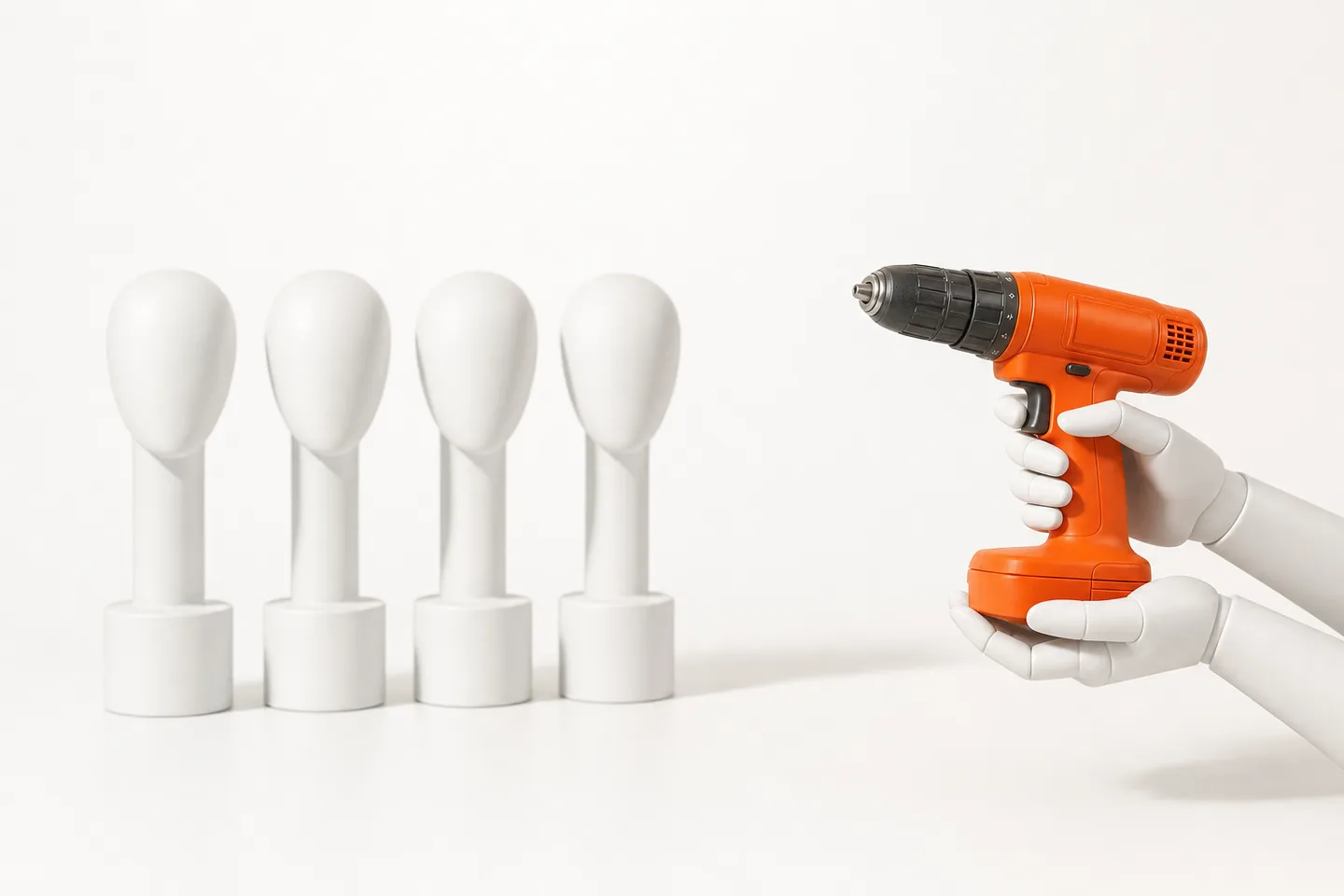
A generic face reading a script is the easiest part of a UGC ad to replace, and real hands on a real product are among the hardest. The risk depends on what you sell more than on your face.
A talking face is the most solved problem in video generation. Give a model a portrait and an audio track and it returns that face speaking those words, lips matched; that is the core of every AI UGC tool, ours included in the AI avatar generator. A creator whose offer is a pleasant face reading the brand's script now competes with that, and we argued in do UGC creators make money that this end of the market is the part that loses on price.
Hands are harder. A hand holding a product has to grip it the way a hand really would, at the right size, with the right number of fingers, and the product has to stay the same object from frame to frame. Our pipeline runs a judge on every still that checks exactly those things, and we learned early that a video model given empty hands tends to invent an object to put in them. Real hands on a real product are still expensive to fake well.
What no model can supply is the thing a face does best: a named person who has used the product saying so. Under the endorsement guides of the US Federal Trade Commission (FTC), that claim needs a real user behind it, which we cover in are UGC ads legal. So the durable positions are a real face with real experience, or real hands on a real product. The weak position is a face with nothing behind it!
What changes in the contract when your face is in the ad?
Your face turns a clip into a licence of your likeness, so read three clauses before you sign. How long may the brand run the ad, may it run it from your own account, and may it edit or reuse your face in other material? Faceless footage carries the same clauses, with less at stake for you personally.
Paid usage is the big one. An organic post on the brand's page and a paid ad running for six months are different products, and creators price them differently; the UGC rates guide sets out how usage windows change a quote. Running the ad from your own handle (Spark Ads on TikTok, partnership ads on Meta) adds your name to the claim, and should cost more.
One clause matters more now than it did two years ago: whether the brand may train a model on your footage or generate new video from it. A face licensed for one ad can, under a loose contract, become an avatar that keeps talking after the deal ends. Ask for that use to be excluded or priced on its own. Disclosure, by contrast, has nothing to do with the camera angle. Whether an ad needs a label depends on the commercial relationship alone.
How do you decide between face and faceless for your first pitches?
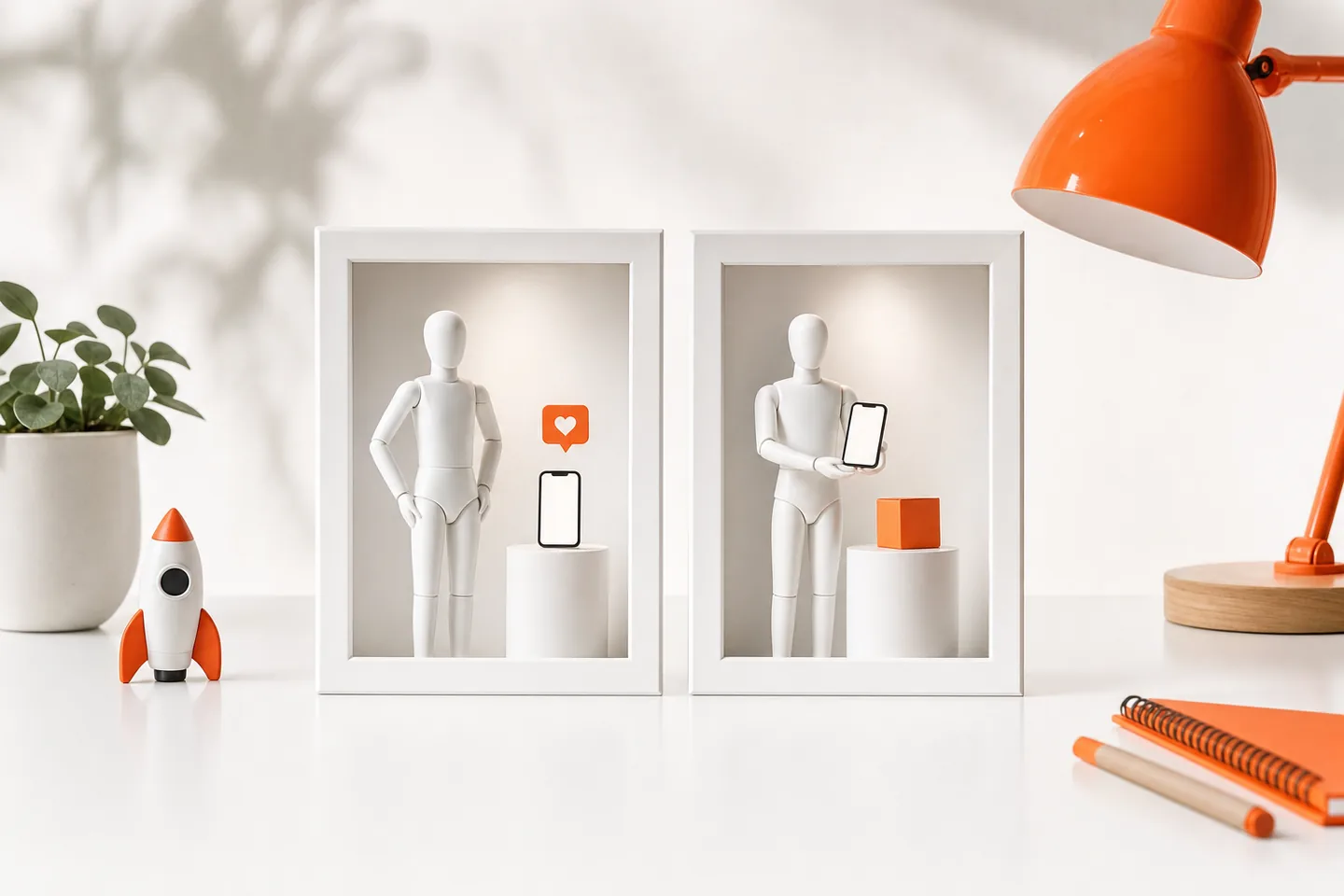
Film one product both ways and pitch the version that fits the brand's category. Two takes of the same script on the same afternoon show you which one you are better at.
Three questions settle most cases. Does the product make a promise about the person using it? Then the face goes in. Does it prove itself by working? Then the hands lead and the face is optional. Would being recognisable cost you something, at work or at home? Then go faceless, built on demos, and say so up front in your pitch.
If you go faceless, compensate where the face used to do the work. Your voice has to carry the warmth, so record it close to the microphone in a quiet room. Your hands become the presenter, so keep them steady, clean and in the light. Open on the product already moving in the first frame, since a hands-only clip has no smile to hold the first second. The rest of the craft, from finding the first brand to pricing the work, is in how to become a UGC creator. Pick the version you would stand behind, and film it!
FAQ
Yes: faceless UGC uses hands, point-of-view shots, screen recordings and a voiceover, and many brands accept it for product demos. Some marketplaces, Billo among them, still require a face unless the brief says otherwise, so check the brief first.
We found no public head-to-head test of face against faceless UGC ads, so nobody can honestly name a winner. Faceless tends to suit products that prove themselves on camera, and a face suits products sold on how the user will feel or look.
It can, but it is usually paid on performance instead of a flat fee per video, according to Publicis as quoted by Digiday in June 2025. That means a higher ceiling for clips that sell and less predictable income from month to month.
Faceless UGC is ad-style video filmed by a real creator that shows hands, product and surroundings instead of a face, with a voiceover or captions carrying the message. It differs from AI-generated UGC because a real person filmed it.
Yes, because brands buy UGC as ad footage to run from their own accounts, so the size of your audience rarely matters. A short portfolio of product videos does the selling instead.