AI UGC: two definitions and the real evidence
AI UGC can mean content made by users with AI tools or ads made to look like a person's phone video. Those are different uses of the same term. When comparing tools, check who appears on screen and which claims the finished video asks them to make.
Search this term and you get two answers that contradict each other. One set of pages says AI UGC means a human creator using AI tools to sharpen their own footage. The other set, most of the tools actually selling under the name, means video where nobody filmed anything. Both camps write as if their definition were settled.
We build one of the systems in the second camp, which is a reason to read this with suspicion and also why it can tell you things the other results cannot: we had to settle every ambiguous question in code and pay the bill for each answer.
So: what the term means, what is physically inside one of these videos, what a render costs us, and what the research says about whether the output sells. That last part is the one no vendor page will show you.
What is AI UGC?
AI UGC is advertising video made in the user-generated style by generative models instead of by a person with a phone. A written script, a synthetic presenter who speaks it, product footage, burned-in captions, a vertical frame. Nobody was filmed.
The phrase borrows from something straightforward. User-generated content is made by users, and the advertising version is footage a brand runs as its own ad while it looks like a customer shot it. We went through how far that label had already drifted from its literal meaning before AI touched it. Putting AI in front finishes the drift: no user, nothing generated by one. What survives is the aesthetic: one person, one phone, one room, talking straight into the lens.
The competing definition is worth naming, because it is not fringe. D-ID's explainer, one of the few non-tool pages ranking for this term, defines AI UGC as human creativity with AI enhancement and reserves AIGC for fully machine-made work. That is a cleaner taxonomy than the market's, and the market ignored it. Every tool page selling under the phrase, ours included, means fully generated, and intent follows the tools. A page using the assisted definition was written before the term settled.
How is AI UGC different from any other AI video?

The difference is the format, not the model. An AI UGC generator and a general text-to-video tool can call the same models. What makes one a UGC ad tool is the set of constraints it refuses to let you break.
Those constraints are boring, and they are the whole product! The frame is 9:16 and nothing else. A person appears and talks, because a UGC ad without a presenter is a product film. The first second carries a hook, because a scroll gives no second chance. Captions are burned in rather than left to the platform, because the sound is off. A spoken call to action closes it. Miss one and the output is a pleasant video that fails at this job.
The presenter is what people mean when they search for an AI avatar: a model that takes a still portrait and an audio track and returns a clip of that face speaking those words, lips matched to the audio. It has no idea what it is saying. That indifference is why the writing carries more weight here than the rendering, the argument we make at length in what UGC ads are actually for.
Hey there :) clicking this would help us so much!
What is actually inside an AI UGC video?
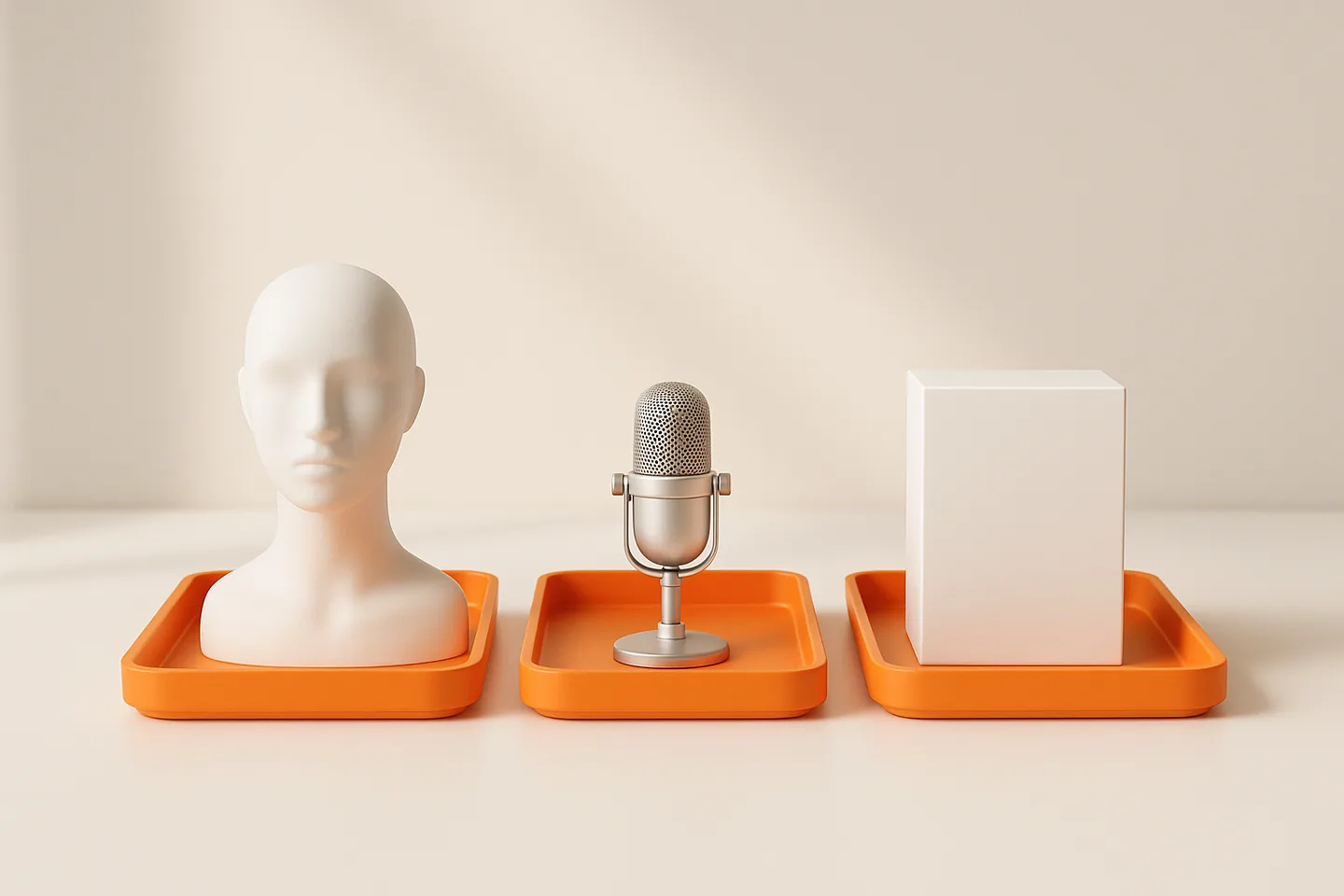
Three separate models and an assembly step. Scene video, a presenter clip and a voice track are generated independently, then our own code cuts them onto a fixed timeline. No single model makes the ad.
Ours are Veo 3.1 Fast for the scene footage, Kling AI Avatar 2.0 for the presenter and ElevenLabs eleven_v3 for the voice, each reached through a registry row rather than a model name in pipeline code. All three swap in a database row without a deploy, and none is exposed to the buyer. We decided early that the product would have no model picker. A buyer picking a model has been handed our job, and when a provider is deprecated in place, which happened to us twice this summer, every saved preference becomes a support ticket.
The timeline those pieces land on is a pure function of the runtime rather than something a model decides. Fifteen seconds is three beats: hook, proof, call to action. Thirty is five, adding a problem and a payoff. Sixty is eight. The scene models generate in eight-second clips, so a 15 second ad is three of them, and the spoken line is budgeted at 14.0 characters of English per second minus a 1.5 second breath at the end. The model writes what goes in each beat. It never chooses how many beats there are.
Then there is the class of problem nobody warns you about. Our presenter model takes the voice as an MP3 and honors the roughly 46 milliseconds of silence the LAME encoder pads onto the front of every such file, so the audio came back leading the lips by exactly that much on every video we rendered. Barely visible, impossible to unsee afterwards. The fix is a 46 millisecond delay on the voice track, one constant in a settings file. Half the work in this stack is that kind of thing!
What does one AI UGC video cost to generate?
About two dollars in provider calls for a 15 second ad, at our stack and our volumes, measured at the end of August 2026. That number is why this category exists, so it is worth taking apart.
Three eight-second scene clips run 33 cents each. The presenter clip costs 32 cents per eight seconds at the standard avatar tier, our default since a pro tier at twice the price showed no difference the buyer could see inside a dock occupying half the frame. Voice runs about half a cent per second of audio, and the speech recognition pass behind the captions costs 10 cents. Final assembly was an external render API billed by the output second, 15 to 45 cents a video, until we moved it on 31 August to our own renderer on our own worker and that line fell to roughly five cents.
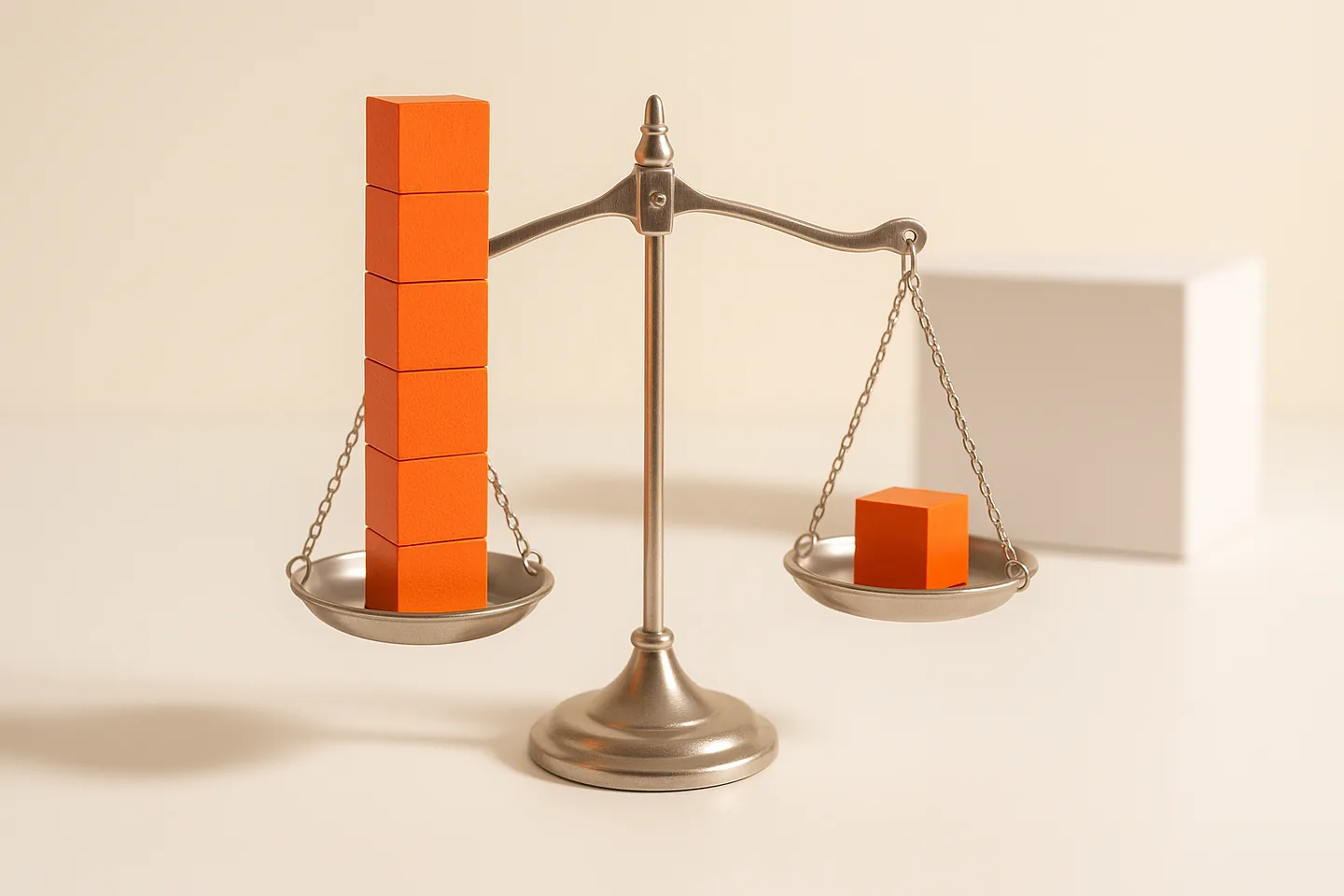
Set that against the same deliverable with a person in it. Published rate guides put a single creator video in the low hundreds of dollars, and we went through the real figures and what usage rights add on top separately. The gap is two orders of magnitude, which is the commercial argument for this category and the reason the next question matters. Cheap output that sells nothing is not cheap!
Does AI UGC work, or does it only look like it works?

The best study available says AI-generated ads underperform human-made ones by 14 percent on short-term effectiveness and 17 percent on long-term, while being close to impossible for viewers to identify as AI.
The work is from Ipsos with Adam Peruta and Carrie Riby of the Newhouse School at Syracuse University, published May 2026. They paired 20 ads across 10 brands including Cheerios, Visa, Ray-Ban Meta and TurboTax, each made before 2021 so no AI tool touched them, with a fully AI-generated version built from the same brief, and tested both on 3,000 US respondents. The human ads scored 11 points above the Ipsos benchmark and the AI versions 5 points below it. Only 13 percent of the people who watched an AI ad were even somewhat confident it was AI, and the same share said that about the human ads.
Take those findings in order, because they answer different questions. Detection is closed: audiences cannot tell, and the worry that generated video looks obviously fake is a worry about last year's models. Effectiveness is open and currently running against us. The gap appeared on storytelling, emotion and point of view, and the researchers observed that AI held up better on straightforward product-driven briefs.
That last clause carries more weight for this category than the headline does. Every ad in the study was a brand film with a creative concept behind it, the kind of work a machine has no opinion to bring. A 15 second vertical ad that says what a product is and why somebody would buy it sits at the other end of the same scale. The one experiment aimed squarely at that end, by Madhav Kumar of MIT's Initiative on the Digital Economy and Anuj Kapoor of the University of Missouri, found AI-generated personalized video ads beat personalized image ads by 9.4 percent on click-through and generic video by 6.5 percent. Neither result licenses the claims the tools in this market make. Ours included.
What is AI UGC still bad at, and what should you not point it at?

It cannot make a claim it has any standing to make, and it cannot show hands working a texture. Both limits have held across every model generation we have tested, and neither is a question of resolution.
The claim problem is the sharper one. A generated presenter has never used anything. Our pipeline runs a check that rejects any spoken line putting durable usage history or measurable personal results into that presenter's mouth, and it overrules the paying customer who typed the sentence. We shipped it as a legal guard, because a testimonial from someone who does not exist is a fabricated endorsement and the FTC has been explicit about that. Living with it taught us something we did not build it for. Opinion, curiosity and reaction pass. History and results do not. That boundary describes what a synthetic presenter can honestly sell.
The hands problem is craft. Generated footage still gets fingers wrong against fabric, liquid, hair and anything that deforms under pressure, which is precisely the shot an unboxing video is built from. Our scene prompts ban people outright and allow hands-only framing as the one exception, and a frame check on the returned video catches what the prompt misses. Somebody will fix this. Nobody has yet.
The useful reading of all this is a boundary rather than a verdict. When the ad has to make a case for a product, show it working and ask for the click, generation does that now for about two dollars and a few minutes, and testing thirty hooks becomes an afternoon instead of a shoot. When it has to be a story that makes somebody feel something about a brand they already know, hire people. We built a machine for the first half of that sentence, and we are not going to pretend it is the second.
FAQ
Sometimes, and it is usually the voice or the hands that give it away rather than the face. The tell moves every few months.
Yes, with disclosure where the platform asks for it. TikTok, Meta and YouTube all run AI-made creative today.
Fifteen to sixty seconds, vertical. Past that the format stops reading as UGC and starts reading as a commercial.
It needs words, not a script you personally wrote. The words can be drafted from the product page and then edited.